
EXPERTISE
Hand Surgery
HAND SURGERY
Purpose
Relieve pain and restore mobility.
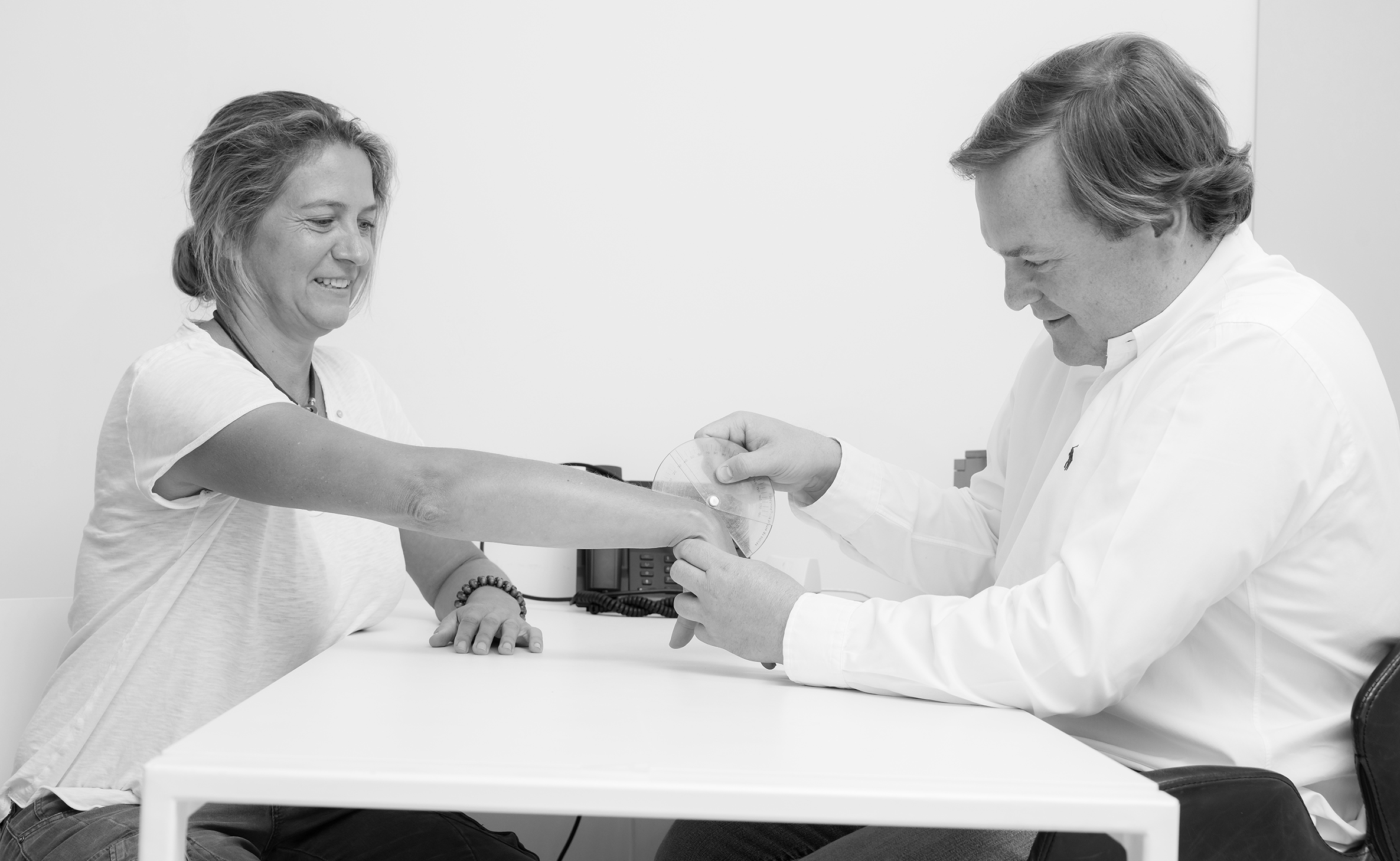
Pathologies of the hand and upper limb
The surgery of the hand covers a wide range of conditions affecting the bones, joints, tendons, nerves, ligaments, muscles, and soft tissues of the upper limb. Each treatment is individually tailored in order to best restore function, relieve pain, and improve quality of life.
Nerve compression and chronic pain of the upper limb
Nerve compression syndromes are among the most common conditions affecting the hand and upper limb. They result from the compression of a nerve along its course and may cause pain, tingling, loss of sensation, or reduced strength.
Conditions treated
- Carpal tunnel syndrome
- Ulnar nerve compression at the elbow (cubital tunnel syndrome)
- Ulnar nerve compression at the wrist (Guyon’s canal)
- Radial nerve compression
- Less common upper limb nerve entrapment syndromes
- Neuropathic pain and post-traumatic nerve sequelae
A thorough clinical assessment, complemented if necessary by electrophysiological tests, allows the most appropriate treatment to be proposed, whether conservative or surgical.
Trigger finger
Trigger finger is caused by a conflict between a flexor tendon and its sheath. It presents as a painful locking of the finger accompanied by a clicking sensation during movement.
Conditions treated
- Adult trigger finger
- Trigger thumb
- Multiple forms
- Recurrent or complex cases
Dupuytren’s disease
Dupuytren’s disease is a chronic disorder of the palmar fascia that progressively leads to the formation of nodules and cords responsible for finger contracture.
Conditions treated
- Painful or bothersome palmar nodules
- Early or advanced contractures
- Involvement of one or several fingers
- Recurrent forms
- Complex cases with severe deformities
The treatment aims to restore finger extension while preserving hand function. Depending on the case, different surgical techniques may be proposed.
Osteoarthritis of the hand and wrist
Osteoarthritis is a progressive degeneration of the articular cartilage that can affect multiple joints of the hand and wrist.
Conditions treated
- Rhizarthrosis (osteoarthritis of the base of the thumb)
- Osteoarthritis of the interphalangeal joints of the fingers
- Metacarpophalangeal osteoarthritis
- Wrist osteoarthritis
- Post-traumatic osteoarthritic sequelae
- Ligamentous instability leading to joint degeneration
Treatment options range from conservative measures to surgical reconstruction procedures, arthroplasty, or arthrodesis depending on the location and stage of the disease.
Tumours of the hand and wrist
The hand may be the site of numerous benign tumours or, more rarely, malignant tumours affecting the skin, tendons, nerves, vessels, or subcutaneous tissues.
Conditions treated
- Synovial cysts (ganglions)
- Giant cell tumours of the tendon sheath
- Lipomas
- Epidermoid cysts
- Benign nerve tumours
- Vascular malformations
- Cutaneous and subcutaneous tumours
- Suspicion of malignant lesions requiring specialised management
Clinical and radiological assessment allows an accurate diagnosis to be established and determines the indication for surgical excision.
Trauma of the hand and upper limb
Trauma can affect bones, tendons, ligaments, nerves, or soft tissues.
Conditions treated
- Fractures of the fingers, hand, and wrist
- Joint dislocations
- Ligament ruptures
- Complex wounds
- Flexor and extensor tendon injuries
- Nerve injuries
- Sequelae of previous trauma
- Post-traumatic stiffness and deformities
The goal is to restore optimal mobility, strength, and sensation of the hand.
Congenital malformations of the hand
Congenital hand surgery is a highly specialised field aimed at correcting abnormalities present from birth in order to improve hand function, growth, and appearance.
Conditions treated
- Syndactyly (webbed fingers)
- Polydactyly (extra fingers)
- Thumb duplication
- Radial club hand (absence or hypoplasia of the radius)
- Ulnar club hand
- Congenitally flexed or deviated fingers
- Thumb hypoplasia
- Digital agenesis
- Cleft hand (ectrodactyly)
- Complex malformations associated with genetic syndromes
- Sequelae of previous congenital surgery requiring revision
Management is carried out in close collaboration with families and often involves long-term follow-up throughout the child’s growth.
Other conditions treated
- Tendinitis and tenosynovitis of the hand and wrist
- De Quervain’s disease
- Cysts and masses of the fingers
- Ligamentous instability of the wrist
- Sequelae of hand burns
- Scar contractures
- Peripheral nerve palsies
- Functional reconstruction of the hand
Treatments
Treatments may be surgical or non-surgical, depending on the condition, symptoms and individual patient needs.
Examples of treatments include:
- Minimally Invasive Surgery
- Microsurgery
- Immobilisation and Orthotic Devices
- Injections
- Rehabilitation
Goals
The objective of each treatment is to preserve or restore a functional, painless hand adapted to the patient’s daily, professional, and sports-related needs.
JOURNEY
Treatment Journey
01
CONSULTATION
02
PLANNING
03
PROCEDURE
04
FOLLOW-UP
01
CONSULTATION
A specialised consultation allows for the assessment of your hand or upper limb condition and helps identify the investigations required to guide your treatment.
02
PLANNING
The diagnostic work-up is carried out directly at the Centre Médical du Parc through a comprehensive multidisciplinary approach available on-site, including X-rays, ultrasound, Cone Beam CT, EMG studies, orthotic devices and physiotherapy. This integrated organisation helps reduce the number of appointments required and streamlines your treatment journey. The necessary consent forms are provided during this stage.
03
PROCEDURE
Procedures are usually performed at Ixelles Hospital (HIS) as day surgery, in an operating theatre dedicated exclusively to hand surgery and equipped with all the facilities required for advanced surgical care.
04
FOLLOW-UP
Post-operative follow-up is provided in collaboration with the physiotherapy and orthotics team to promote optimal functional recovery. Patients also benefit from direct access to Dr Cuylits through a dedicated telephone line and WhatsApp channel should they require assistance.